Best Dental Insurance Switzerland (2026 Guide)
Best Dental Insurance Switzerland (2026 Guide)
Navigating the complexities of healthcare, especially dental care, in Switzerland can be a daunting task. Known for its high quality of life and exceptional medical standards, Switzerland also has some of the highest healthcare costs globally. Dental treatments, in particular, are often a significant out-of-pocket expense, as they are largely excluded from mandatory basic health insurance. This comprehensive guide aims to shed light on the options available for securing the best dental insurance in Switzerland for 2026, helping residents make informed decisions to protect their oral health and financial well-being.
Oral health is intrinsically linked to overall systemic health. Neglecting dental issues can lead to more severe conditions, discomfort, and even higher costs down the line. While routine check-ups and cleanings might seem manageable, unexpected emergencies, complex procedures like root canals or dental implants, or orthodontic treatments can quickly accumulate into thousands of Swiss Francs. This financial burden is precisely why many residents explore supplemental dental insurance plans. Understanding the nuances of these plans – what they cover, their limitations, and their cost-effectiveness – is crucial for anyone living in Switzerland.
Understanding Dental Costs in Switzerland
Switzerland’s reputation for premium services extends to its dental care. The quality of treatment is exceptionally high, with state-of-the-art clinics, highly trained professionals, and advanced technologies. However, this quality comes at a price. A standard dental cleaning can range from CHF 100 to CHF 200, while a simple filling might cost CHF 200 to CHF 500. More complex procedures, such as a single dental implant, can easily exceed CHF 3,000 to CHF 5,000, and a full set of veneers or crowns could run into tens of thousands. Orthodontic treatments for children or adults can similarly be a substantial investment, often costing upwards of CHF 10,000.
Unlike many other European countries where dental care is partially or fully covered by general health insurance, in Switzerland, basic mandatory health insurance (KVG/LAMal) typically covers only dental treatments necessitated by severe illnesses (e.g., related to cancer or serious accidents) or congenital conditions. This means that routine check-ups, fillings, extractions, root canals, crowns, implants, and most orthodontic work fall outside of standard coverage. This fundamental difference makes supplemental dental insurance a topic of significant importance for anyone seeking predictable and affordable access to dental care.
The Swiss Healthcare System and Dental Exclusions
The Swiss healthcare system is based on a mandatory health insurance model, where all residents must have basic health insurance. This insurance primarily covers medical treatments in case of illness or accident, hospital stays, and prescription medications. However, the legislation specifically excludes most dental treatments from this basic package. The philosophy behind this exclusion is often attributed to the idea that regular preventative dental care should prevent major issues, and therefore, costs should be borne by individuals unless an acute medical necessity arises.
This exclusion means that individuals are personally responsible for the vast majority of their dental bills. For families, especially those with children requiring orthodontic care, or individuals anticipating major dental work such as implants or extensive restorative procedures, the financial implications can be substantial. This gap in coverage is precisely what supplemental dental insurance aims to fill, providing a financial safety net for expected and unexpected dental expenses.
Best Dental Insurance Switzerland: Key Considerations for 2026
When evaluating the best dental insurance options in Switzerland for 2026, several critical factors come into play. These elements dictate the suitability and cost-effectiveness of a plan for individual needs.
1. **Coverage Scope and Percentage**: Dental insurance plans vary significantly in what they cover and the percentage of costs reimbursed. Most plans offer tiered coverage:
* **Preventive Care**: Typically includes check-ups, cleanings, and sometimes fluoride treatments. Reimbursement rates are often highest here (70-100%).
* **Routine Treatments**: Covers fillings, extractions, and potentially simple root canals. Reimbursement usually ranges from 50-80%.
* **Major Treatments**: This category includes crowns, bridges, dentures, dental implants, and more complex root canal therapy. Coverage for these is often lower (30-60%) or might have higher annual limits.
* **Orthodontics**: A critical consideration for families. Orthodontic coverage is often limited, may have specific age restrictions (e.g., only for minors), and usually comes with significant waiting periods and annual caps.
2. **Waiting Periods**: Almost all dental insurance plans in Switzerland impose waiting periods before certain benefits become active. This prevents individuals from signing up only when a major treatment is imminent. Waiting periods can range from 3 to 12 months for routine treatments and up to 24 months for major procedures like implants or orthodontics. It is vital to check these carefully.
3. **Annual Limits**: Most policies have an annual maximum reimbursement amount (e.g., CHF 1,000, CHF 3,000, or CHF 5,000). Once this limit is reached, you are responsible for 100% of further costs until the next policy year.
4. **Premium Costs**: The monthly or annual premium will depend on your age, the level of coverage, and the chosen insurer. Younger individuals or those opting for basic plans will pay less.
5. **Age Restrictions and Health Questions**: Some insurers have age limits for new applicants, especially for comprehensive plans. You may also be required to answer health questions or undergo a dental examination, and pre-existing conditions (e.g., missing teeth or ongoing treatments) might be excluded or subject to higher premiums.
6. **Choice of Dentist**: Most Swiss dental insurance plans allow you to choose any licensed dentist. However, some might offer preferential rates or higher reimbursement percentages if you visit their network providers.
7. **Deductibles (Franchise)**: While less common in supplemental dental insurance than basic health insurance, some plans might have a deductible (franchise) that you must pay out-of-pocket before the insurance coverage kicks in.
Comparing Dental Insurance Plans in Switzerland
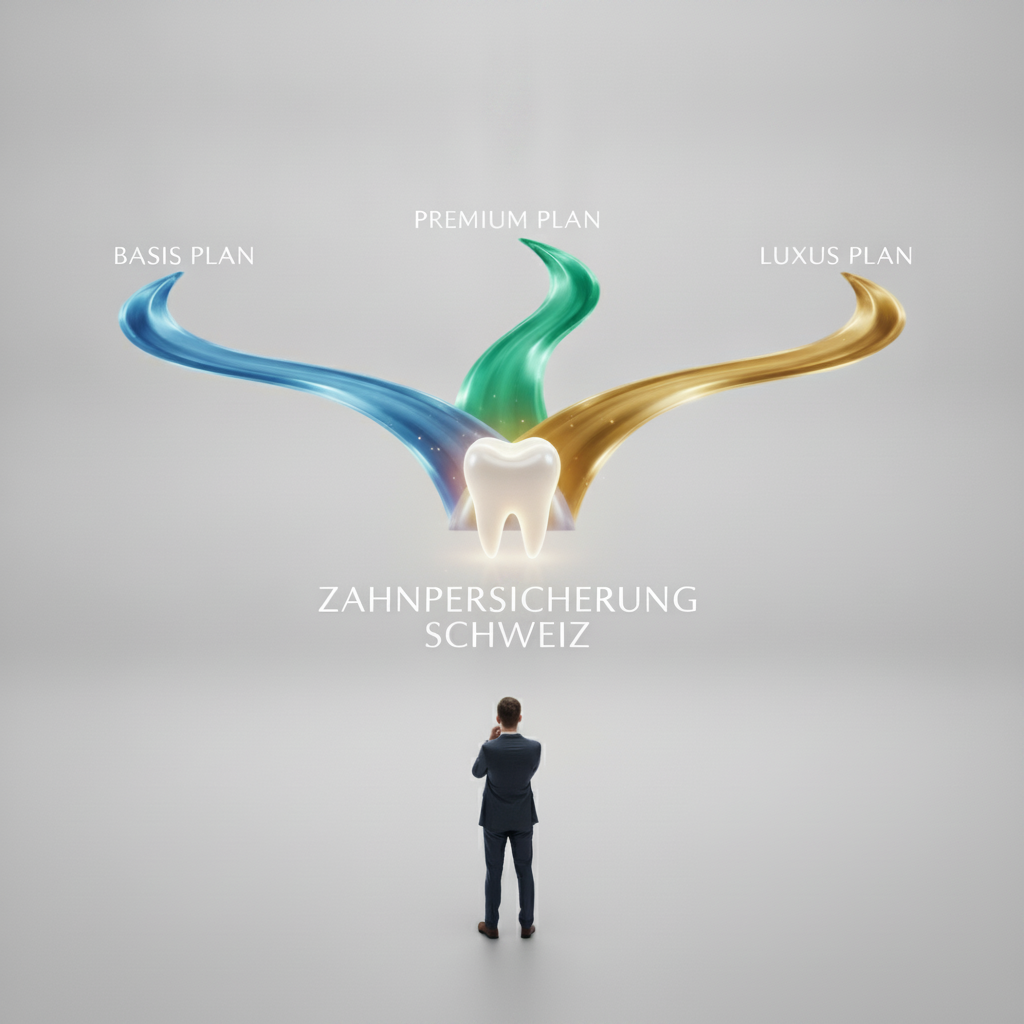
To help visualize the differences between typical plans, here is a general comparison table. Please note that these are illustrative figures and actual plans will vary by provider and specific policy terms.
| Feature | Basic Coverage Plan | Comprehensive Plan | Premium Plan |
|---|---|---|---|
| Preventive Care | 50-70% Reimbursement | 80-100% Reimbursement | 90-100% Reimbursement |
| Routine Treatments (Fillings, X-rays) | 30-50% Reimbursement | 60-80% Reimbursement | 70-90% Reimbursement |
| Major Treatments (Crowns, Bridges, Implants) | Limited/None (up to 30%) | 30-50% Reimbursement | 50-80% Reimbursement |
| Orthodontics | Excluded | Limited (e.g., for children, max 50%) | Up to 50% (with higher limits) |
| Waiting Period (Major Treatments) | 12-24 months | 6-12 months | 0-3 months |
| Annual Maximum Limit | CHF 500-1,500 | CHF 1,500-3,000 | CHF 3,000-5,000+ |
| Average Monthly Premium | CHF 15-30 | CHF 30-70 | CHF 70-150+ |
Is Dental Insurance Worth It in Switzerland?
The question of whether dental insurance is worth the investment depends heavily on individual circumstances and anticipated dental needs. For those who visit the dentist only for an annual check-up and have excellent oral health, a basic plan might offer minimal return on investment. However, for others, it can be a significant financial safeguard.
Consider the following scenarios:
* **Families with Children**: If you have children who may need orthodontic treatment, or are prone to cavities, a comprehensive plan with good orthodontic coverage could save thousands of Swiss Francs.
* **Individuals Anticipating Major Work**: If you know you will need a dental implant, multiple crowns, or extensive restorative work in the coming years, taking out a plan well in advance (considering waiting periods) can reduce your out-of-pocket expenses considerably. For a detailed discussion on this topic, you can read more about Is Dental Insurance Worth It in Switzerland.
* **Preventive Focus**: For those who prioritize regular preventive care to avoid major issues, even a basic plan covering 70-100% of cleanings and check-ups can ensure consistency without financial strain.
* **Peace of Mind**: For many, the greatest benefit is the peace of mind that comes with knowing unexpected dental emergencies or costly procedures are partially covered, avoiding sudden financial shocks.
Conversely, if your dental health is consistently excellent, and you have no dependents requiring extensive dental care, paying premiums for years without claiming significant benefits might make dental insurance seem less attractive. In such cases, a personal savings fund dedicated to dental expenses could be an alternative.
How to Choose the Right Dental Insurance Plan for 2026
1. **Assess Your Needs**: Honestly evaluate your current dental health, any known future needs (e.g., wisdom teeth extraction, old fillings needing replacement), and your family’s history.
2. **Understand Your Budget**: Determine how much you are comfortable paying in monthly premiums.
3. **Start Early**: Due to waiting periods, it’s always better to get dental insurance before you foresee the need for major treatments.
4. **Compare Providers**: Obtain quotes and compare policy details from several leading Swiss insurance providers. Look beyond just the premium; focus on coverage percentages, annual limits, waiting periods, and exclusions.
5. **Read the Fine Print**: Pay close attention to the general terms and conditions (AVB). Understand what constitutes “major treatment,” how pre-existing conditions are handled, and any cancellation clauses.
6. **Choice of Dentist**: Most Swiss dental insurance plans allow you to choose any licensed dentist. However, some might offer preferential rates or higher reimbursement percentages if you visit their network providers.
7. **Deductibles (Franchise)**: While less common in supplemental dental insurance than basic health insurance, some plans might have a deductible (franchise) that you must pay out-of-pocket before the insurance coverage kicks in.
Future Outlook for Dental Insurance in Switzerland (2026)
The landscape of dental insurance in Switzerland is unlikely to undergo radical changes by 2026. The core principle of dental care being separate from basic health insurance is deeply entrenched. However, we may see:
* **Increased Digitization**: More online comparison tools, digital consultations, and streamlined claims processes.
* **Personalized Plans**: Insurers might offer more customizable modules, allowing individuals to tailor coverage more precisely to their specific needs (e.g., a “cosmetic dentistry add-on” or a “child orthodontics boost”).
* **Focus on Prevention**: Continuous emphasis on preventive care within plans, recognizing its long-term benefits for both patients and insurers.
* **Integration with Overall Wellness**: Some insurers may start to link dental health benefits with broader wellness programs, encouraging holistic health management.

Ultimately, securing the best dental insurance in Switzerland for 2026 involves careful research, a clear understanding of your personal and family dental needs, and a realistic assessment of the financial implications. While Swiss dental care is undeniably excellent, proactive planning with a suitable insurance policy or considering alternative solutions like dental tourism can ensure that maintaining a healthy smile remains affordable and accessible for all.